Buying now, planning ahead or still comparing places? Pick what fits and where you are looking. A real person on the team follows up with a plan for your search. This requests a conversation, not an appointment.
The questions we hear every week.
How do flood zones work in Cape Coral, and do I need flood insurance?
It depends on the zone and the loan. Zone AE is a Special Flood Hazard Area, and flood insurance is mandatory there for buildings securing a government-backed mortgage. A lender can also require it in shaded or unshaded Zone X, and lower mapped risk does not mean no flood risk. Cape Coral's current FEMA maps took effect November 17, 2022, so check the panel, the building location, the Base Flood Elevation and any elevation certificate for the address.
What is the real difference between direct gulf access, indirect gulf access and freshwater canals?
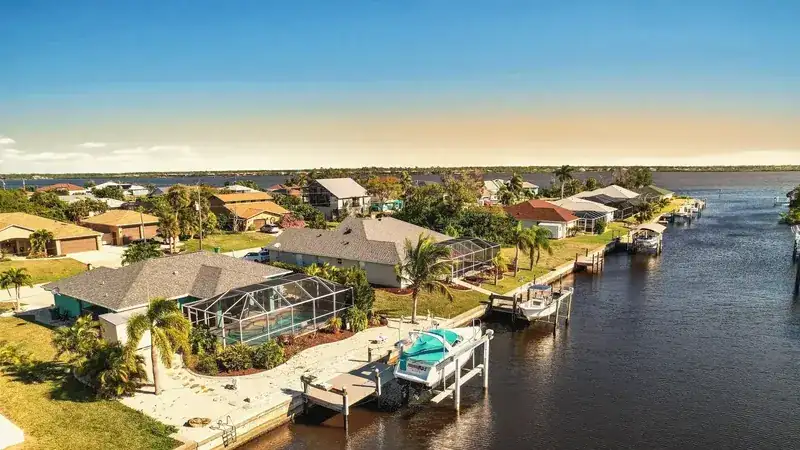
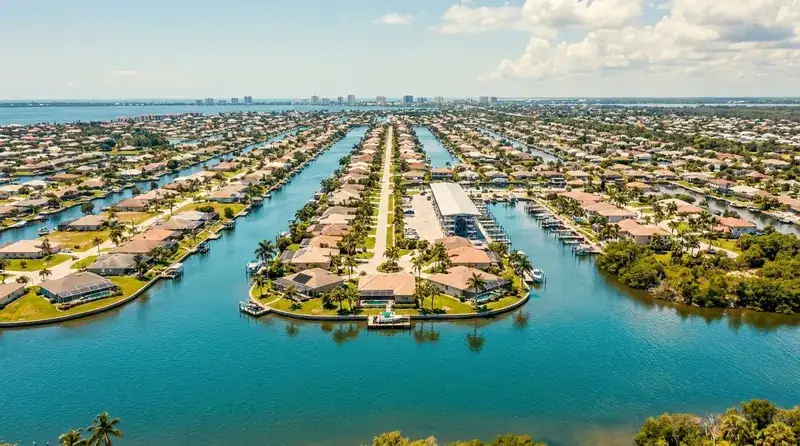
Direct gulf access describes a route from the dock to open water without a fixed bridge. Indirect gulf access reaches the Gulf with a fixed bridge on the route, which can rule out a taller boat. Freshwater canals do not connect to the Gulf by boat; they are for views, kayaks, paddleboards and fishing. The same street can have different canal types on opposite sides, so we check the canal type and the actual route before you write an offer.
Which loan types fit a Southwest Florida purchase?
Conventional loans can go as low as 3 percent down for eligible buyers through eligible Freddie Mac Home Possible or HomeOne programs. FHA down payments can be as low as 3.5 percent of the price. Eligible VA buyers may need no down payment when the price is not above the appraised value, and program rules determine the remaining costs. Program rules and lender standards apply, so confirm current guidelines with your lender before you plan around any figure.
Is insurance in Southwest Florida really as bad as people say?
Insurance pricing follows the address, building condition, coverage limits, deductibles and insurer terms, so a headline average tells you little about one home. We help gather roof, construction, opening-protection and elevation records so a licensed insurance agent can quote the home before you commit. Compare homeowners and flood coverage separately, then confirm the lender requirements and effective dates.
What are closing costs and utility assessments going to cost me?
Closing costs depend on the price, the loan and the contract. Florida charges documentary stamp tax on a new mortgage note at 35 cents per $100, and on the deed at 70 cents per $100 outside Miami-Dade; the contract sets who pays each item. In Cape Coral, also check the parcel for a utility assessment for water, sewer and irrigation lines, which may be paid, financed on the tax bill, pending or not yet scheduled. You can check any Cape Coral parcel on our assessments map before you write an offer.
I am self-employed or 1099. Can I still get a loan here?
Usually yes, though not always on the standard FHA or conventional path. Brayden bought his own first house on a bank-statement loan because self-employment write-offs put his taxable income below the conventional qualifying threshold. Non-QM products such as bank-statement, DSCR and asset-based loans are real options with the right local lender. Do not assume you are out before we have looked.
How do you negotiate for buyers?
Price is one part of a deal. We also negotiate closing-cost credits, repair credits, rate buydowns and terms. A wind mitigation report, a 4-point inspection and an elevation read can move the negotiation after the inspection. If you are about to overpay, or the property has a hidden problem, you hear it from us first.
Who pays the agent when you buy?
You sign a buyer agreement with your agent before we tour homes together, and it states the agent's fee. Plainly, that makes you the one responsible for that fee. We ask the seller for concessions or a closing-cost credit toward it, the same way we ask for everything else in the offer. Nothing is promised: the seller can say no, and the contract decides who pays what. We show you the numbers before you sign.
What does the first call look like?
A conversation about your situation, the area and next steps, by phone or video, with your chance to ask anything. There is no pressure to commit. We can point you to the guides for your questions and agree on the next step together.